2011 saw upheaval in many Middle Eastern and North African countries as oppressive regimes were fought and toppled in favor of democratic processes. This phenomenon has been dubbed the Arab Spring, a name mimicking the Cold War phenomenon, Prague Spring; a time of political liberalization in Soviet Czechoslovakia in which, for a short time, Moscow allowed a Czech government, run by Dubcek, to carry out a series of reforms. These included a general lessening of restrictions on media, travel and speech. Dubcek also began a decentralization of his country from Moscow’s omnipresent rule. Despite the ultimately brutal end to the democratic trend in 1968, in many cases, the protests and fights in the Arab countries can be viewed as a modern day Prague Spring. One just hopes that its end will come at the hands of true democratic reforms, rather than a brutal invasion and crackdown by the oppressors.
In Syria, unrest began to be evident February, 2011, and has yet to see an end, as the al-Assad headed government is still in power and efforts by the Arab League and United Nations have not seen success. Initially, many protests and demonstations were in support of similar actions in Egypt and Libya, but as police action against the demonstrators increased, protests found focus on the oppressive Assad regime. The first explicit demonstration was March 15, 2011, when a group of 200 male demonstrators grew to over 1,500 in Damascus.
The United Nations has been unable to pass a Security Council resolution, as China, and especially Russia, have vetoed all attempts; the most recent being an Arab League backed Security Council resolution that failed on Saturday February 4th after being vetoed by both China and Russia. The Arab League has had little success on its own as well. After a seemilingly promising peace plan, the Arab League ended their mission in Syria Saturday, January 28 due to the regime’s escalation of violence. The month-old Arab observer mission in Syria had come under widespread criticism for failing to bring a halt to the regime’s crackdown. Gulf states led by Saudi Arabia pulled out of the mission Tuesday, asking the U.N. Security Council to intervene. Attention focused on Russia, which stoutly opposes an Arab League proposal, backed by Western and Arab diplomats, that calls for Mr. Assad to cede power as part of a transition to democracy.
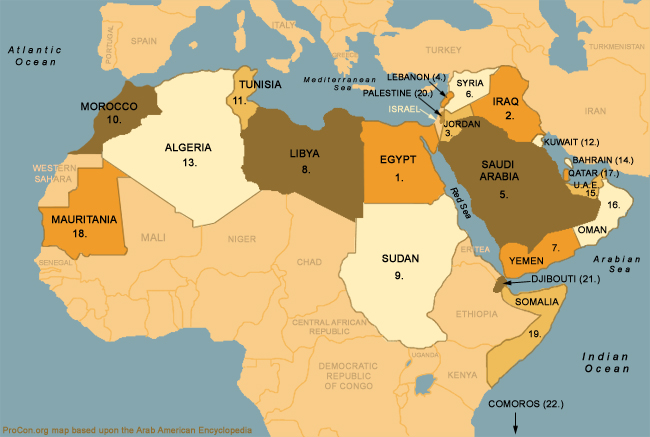 The League, formed in Cairo on March 22, 1945, used to have Syria as on of their membership, but their particiaption was suspended by the League in November 2011. The aims of the league in 1945 were to strengthen and coordinate the political, cultural, economic, and social programs of its members, and to mediate disputes among them or between them and third parties. The position that the League has taken on Syria coincides with most of those found in the United Nations, save the two veto wielding members, China and Russia. In such a situation, it would appear that the legitimacy of a resolution should increase with a regional body asking for assistance from the UNSC; an organization established to reder aid in such situations. That China and Russia are the two largest providers of arms to the Assad regime in Syria cannot be overlooked. As the resolution met all the Chinese and Russian demands as to content, and was still vetoed, this dealing in arms should be further viewed as the true reason behind their reluctance to pass any resolution that could result in the end to Assad’s bloody rule. And that every other member of the Council, the members of the Arab League and the majority of Syrians believe aid is needed shows one of the few vastly unified situations the UN has faced. Condemnation has not lessened with respect to Assad and his “killing machine”, but has now turned in force to include Russia and China.
U.S. State Department spokeswoman Victoria Nuland said the draft had demanded that the government end the violence, pull back its heavy weaponry from residential areas, allow monitors to operate freely, release political prisoners and allow the news media to operate. The draft also called on the Syrian authorities to put “an end to all human rights violations and attacks against those exercising their rights to freedom of expression.” The resolution called for a unity government to oversee a transition to democracy and does not compel “states to resort to the use of force, or the threat of force”; a point that was deemed non-negotiable by Russia.
The Syrian government has long held that armed gangs acting out a foreign conspiracy are behind the revolt, not protesters seeking change in one of the most authoritarian states in the Middle East. This further failure on the part of the United Nations Security Council has arguably given the regime “license to kill”. Countries, such as the United States, now find themselves in the position of independently imposing sanctions; an action that could produce economic effects, but will not produce the international condemnation that a unified resolution in the Security Council would have. The existence of the veto in the Security Council has proven disastrous on many occasions before, and has been again. Syrians feel abandoned, and the death toll rises.
 international canadian